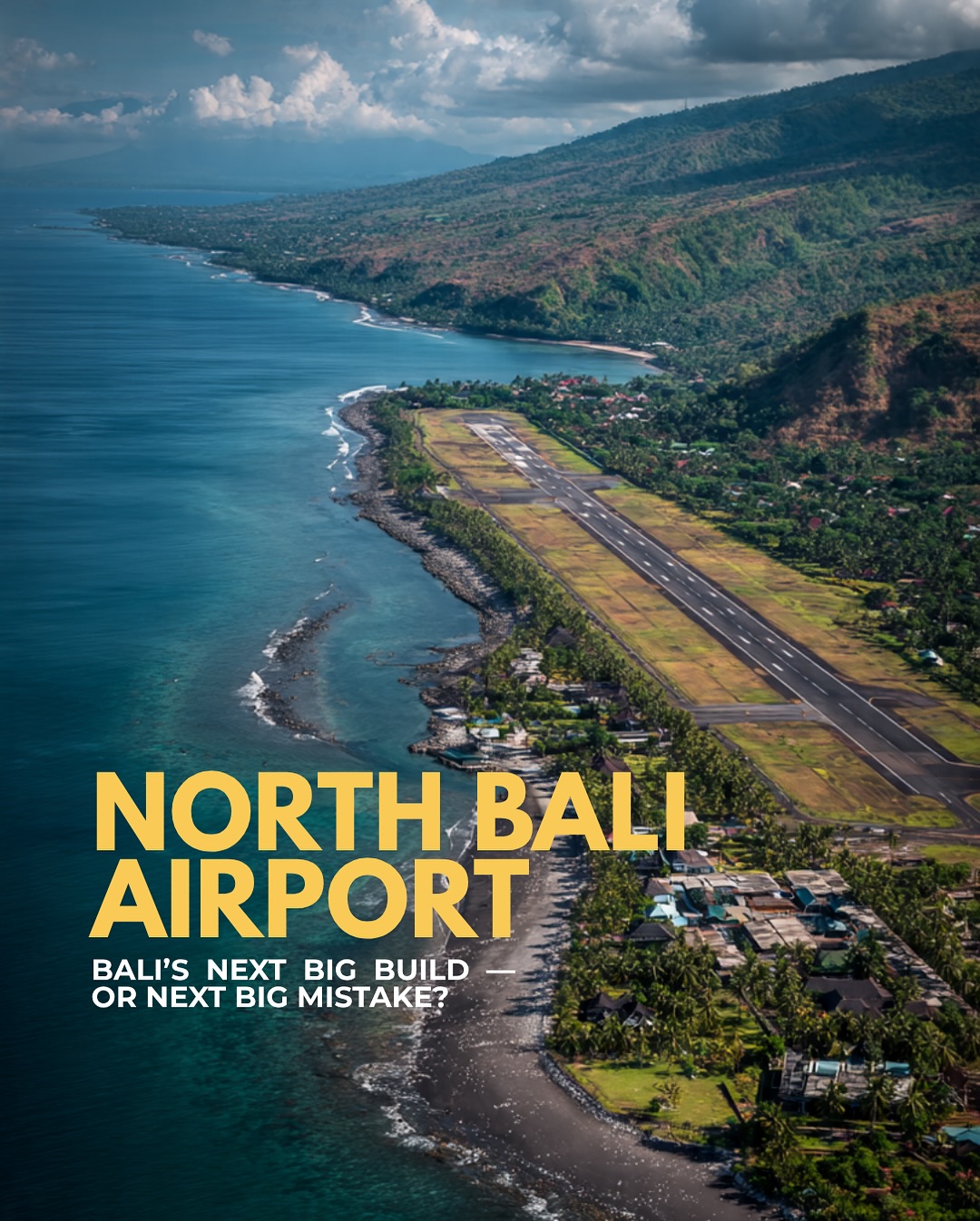
Billions discussed. Consultants hired. Studies commissioned. And Buleleng still waits for the airport that was supposed to change everything. After a decade of broken promises, is North Bali's airport just a political mirage?
North Bali Airport: Ten Years of Promises, Still No Runway
Billions discussed. Consultants hired. Studies commissioned. And Buleleng still waits for the airport that was supposed to change everything.
The Dream That Won't Take Off
In 2015, Indonesia's Ministry of Transportation announced a plan that North Bali had been waiting generations to hear: a new international airport in Buleleng regency. The pitch was seductive. Ngurah Rai International Airport, Bali's only commercial gateway, was choking on 27 million passengers annually in facilities designed for 13 million. North Bali—beautiful, underserved, economically stagnant—would get its turn.
The benefits seemed obvious: infrastructure for the north, congestion relief for the south, balanced development across the island. President Jokowi himself called it a "game-changer" for regional equity.
That was a decade ago.
Today, there's no airport. No land acquisition. No permits. No runway. Not even a confirmed site. What there is: mounting frustration, political finger-pointing, and the growing suspicion that North Bali's airport was never meant to be more than a campaign promise.
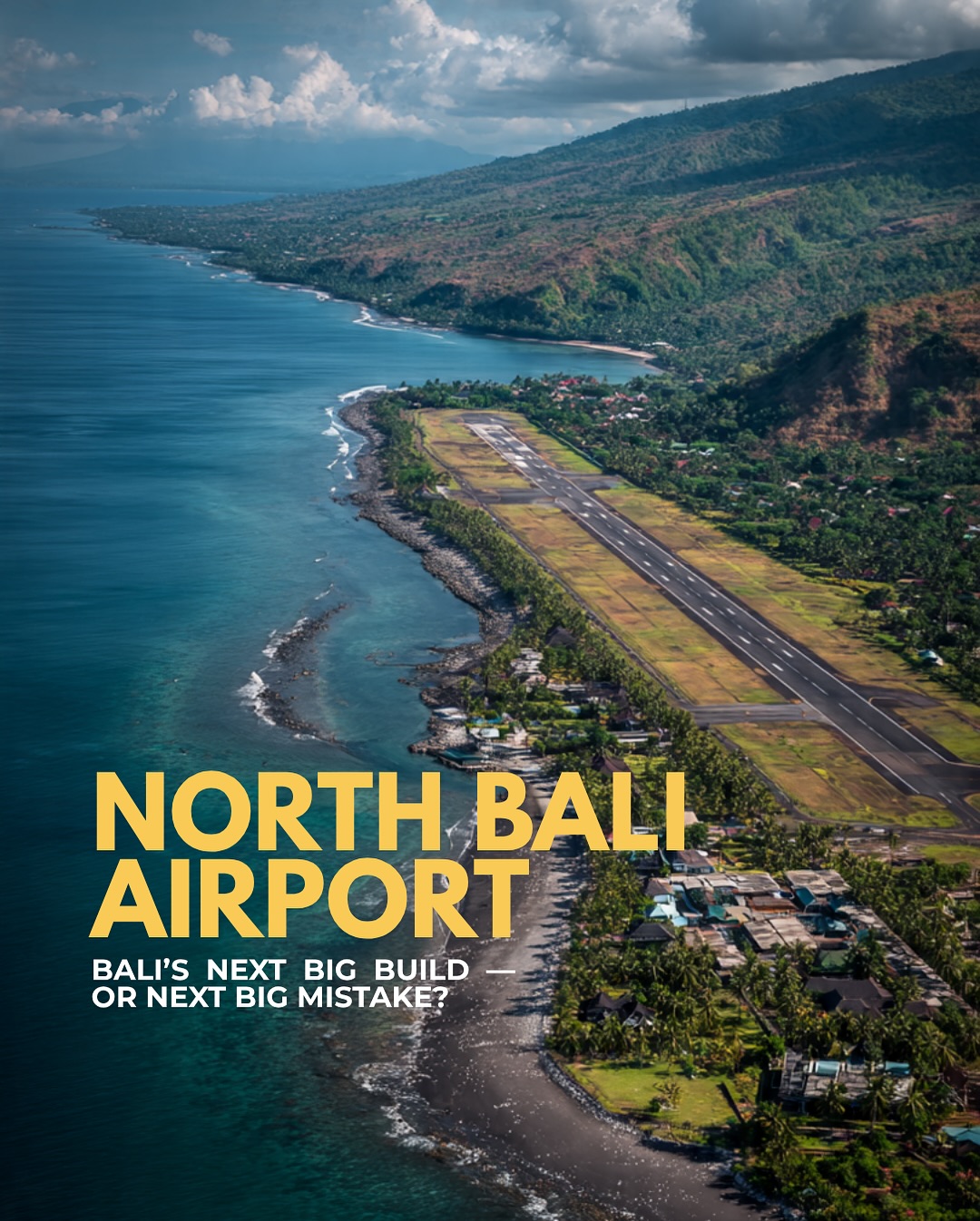 Vision of modern airport infrastructure - the kind of world-class facility North Bali was promised
The Numbers Game
On paper, the case for North Bali Airport is irresistible.
Ngurah Rai handles 97% of Bali's tourist arrivals, channeling millions through Denpasar and surrounding areas while North Bali languishes with single-digit tourism shares. A second airport could:
- Redistribute 30-40% of tourist traffic northward
- Create 15,000 direct jobs in Buleleng
- Attract ₹12 trillion in private investment over 10 years
- Reduce travel time from airport to Lovina by 2.5 hours
Ministry projections estimated the airport could serve 7-10 million passengers annually by 2035, turning Buleleng from Bali's forgotten regency into a competitive tourism hub.
But numbers only matter if you build the thing.
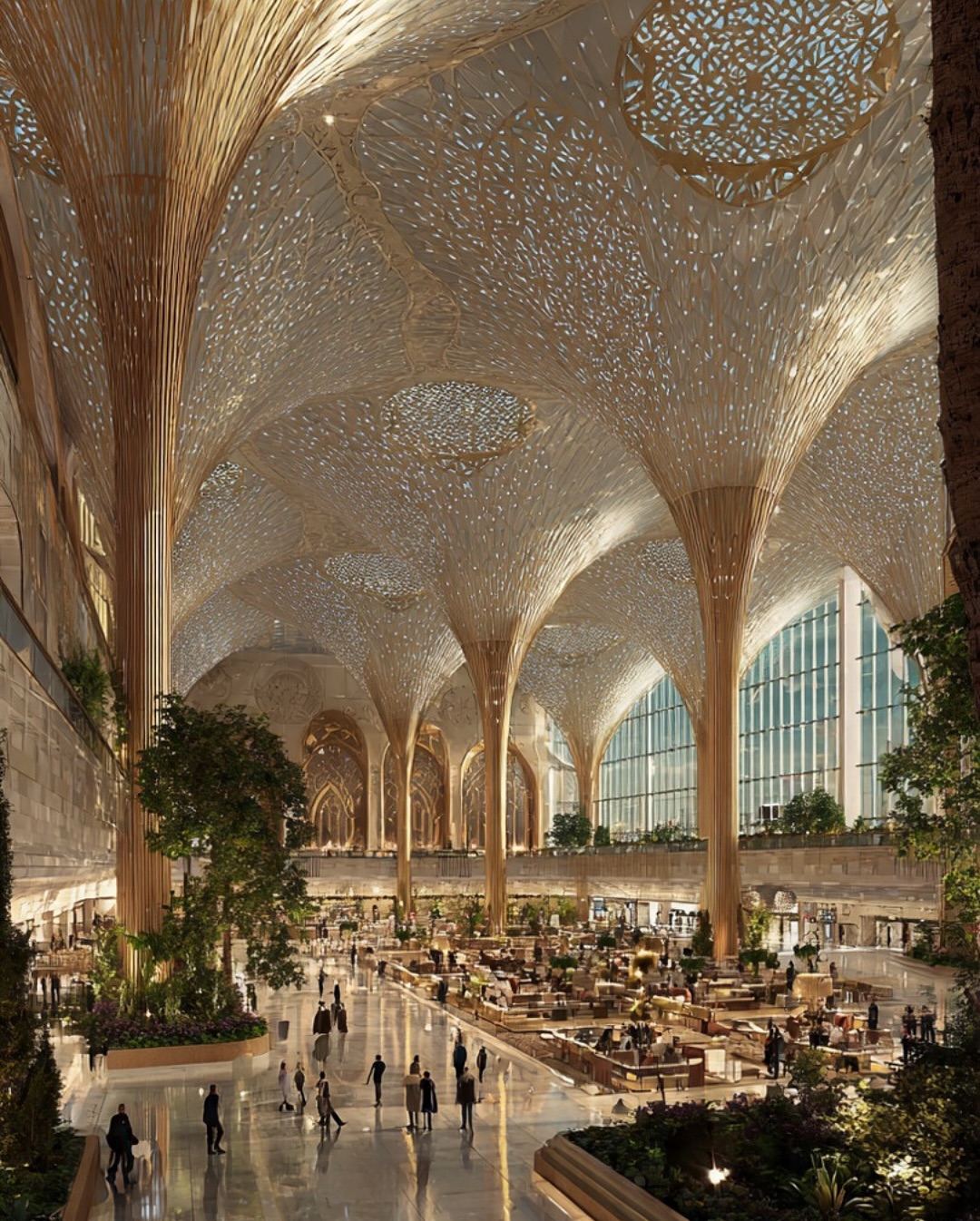 World-class airport infrastructure - the type of international standard facility North Bali deserves
The Site Nobody Can Agree On
Between 2015 and 2025, the North Bali Airport project has considered four different locations:
- Kubutambahan (2015-2017): Rejected due to hilly terrain and inadequate land availability.
- Gerokgak (2017-2020): Abandoned after environmental impact assessments flagged concerns about coastal erosion and mangrove destruction.
- Buleleng Coast (2020-2023): Shelved when landowners demanded compensation rates 400% above government valuations.
- TBD (2023-present): Current status—"under review."
"Every time we get close, something changes," said I Nyoman Suardana, head of the Buleleng Chamber of Commerce. "Different ministry, different study, different site. At some point, you stop believing it's coming."
The problem isn't just logistics. It's political will.
The Funding Problem Jakarta Won't Solve
Building an international airport from scratch costs money—₹18-25 trillion, depending on capacity and infrastructure. The Indonesian government has made clear it won't shoulder that burden alone. The plan relies on Public-Private Partnerships (PPP), where private investors fund construction in exchange for operational concessions.
But PPP deals require certainty: confirmed sites, approved environmental clearances, guaranteed returns. North Bali's airport has none of that.
"No serious investor will commit billions to a project that doesn't have land locked down," said Adi Prabowo, infrastructure analyst at Jakarta-based PT Indosurvey. "And no government agency wants to start land acquisition without funding secured. It's a chicken-and-egg problem, and neither side blinks first."
Meanwhile, the Ministry of Transportation's 2025 budget allocates ₹0 for North Bali Airport construction. The line item reads "feasibility study continuation"—the same language it's used since 2019.
South Bali Doesn't Want Competition
Officially, nobody in Bali's southern business community opposes the airport. Off the record? It's a different story.
Denpasar, Kuta, Seminy ak, Canggu—Bali's tourism economy runs on southern infrastructure. Hotels, restaurants, tour operators, transport companies—they've all built empires around proximity to Ngurah Rai. A functional North Bali airport threatens that monopoly.
"If tourists can fly directly to Lovina and skip the south entirely, what happens to our market share?" asked a Denpasar hotel association executive who requested anonymity. "We're not officially lobbying against it. But we're not exactly pushing for it either."
The political calculus is clear: South Bali votes. South Bali spends. And politicians, regardless of party, need both.
The Environmental Wildcard
Even if the funding and site issues were resolved tomorrow, North Bali's airport would still face a gaunlet of environmental approvals—and activists ready to fight.
Proposed sites in Gerokgak and Buleleng Coast both threatened mangrove forests and coastal ecosystems critical for storm surge protection (a particularly sensitive issue post-September floods). Local NGOs argue that building a massive concrete structure on Bali's northern coastline would accelerate erosion and destroy marine habitats.
"We already learned the hard way what happens when you prioritize development over environment," said Putu Suartini, director of the Bali Environmental Forum. "Another megaproject that ignores ecology? We'll fight it in court, in the media, and on the ground."
Indonesia's environmental review process has grown stricter in recent years, particularly for large-scale infrastructure. Activists successfully delayed Jakarta's coastal reclamation project for eight years. They could do the same to North Bali.
What the Government Isn't Saying
In October 2025, Minister of Transportation Budi Karya Sumadi gave his most candid assessment yet:
"The North Bali Airport remains a priority. But we must balance infrastructure needs with fiscal responsibility and environmental sustainability."
Translation: It's not happening anytime soon.
The government has quietly shifted focus to expanding Ngurah Rai's capacity instead—a ₹4.2 trillion renovation to handle 35 million passengers annually by 2030. It's cheaper, faster, and doesn't require starting from scratch in a politically complex region.
For North Bali, that's a death sentence disguised as pragmatism.
The Northern Perspective
"They promised us jobs, investment, growth," said Made Yoga, a tour guide in Lovina. "Ten years later, we're still waiting while southern Bali gets richer. At what point do we stop being patient?"
The economic disparity between North and South Bali is stark:
- Average income in Denpasar: ₹78 million/year
- Average income in Buleleng: ₹31 million/year
- Tourism spending in South Bali: 94%
- Tourism spending in North Bali: 3%
An airport could close that gap. Or it could accelerate the same overdevelopment and environmental destruction that's plagued the south—just with a northern postcode.
The Question Nobody's Asking
Should North Bali even want this airport?
The promised benefits—jobs, tourism, investment—are real. But so are the risks: uncontrolled development, environmental degradation, loss of cultural identity. South Bali is a cautionary tale, not a blueprint.
"Maybe the better question is: what kind of development does North Bali actually need?" said Dr. I Ketut Sudewa, an urban planner at Udayana University. "Is it a mega-airport that turns Lovina into Canggu 2.0? Or is it sustainable infrastructure that preserves what makes North Bali special?"
That's the conversation Indonesia should be having. Instead, it's having the same one it's had for ten years: promises, delays, and consultants billing by the hour.
What Happens Next?
The Ministry of Transportation says a final site decision will be made by Q2 2026. Industry observers are skeptical. North Bali residents are exhausted. And southern business interests are quietly hoping the whole thing fades away.
If the airport ever breaks ground, it won't resemble the grand vision promised in 2015. It'll be smaller, more expensive, and arrive after the moment when it could have made a real difference.
Or it won't be built at all. And North Bali will keep waiting.
For Investors: What This Means
If you're considering business opportunities in North Bali based on the airport promise, proceed with extreme caution. Land speculation tied to the airport has already burned investors who bought "prime locations" near proposed sites that never materialized.
Smart investment in Bali—North or South—requires navigating a complex regulatory environment, understanding actual government priorities (not press releases), and building businesses on existing infrastructure, not hypothetical airports.
Thinking of investing in Bali or establishing a business in Indonesia? Bali Zero provides expert guidance on company formation, property advisory, and regulatory compliance—helping you make informed decisions based on real data, not development dreams.
📲 Connect with Bali Zero's team for investor-focused insights on Indonesia's actual infrastructure landscape.
Header image: Proposed North Bali Airport site, Buleleng regency. Source: Instagram @balizero0
Premium business intelligence for Southeast Asia