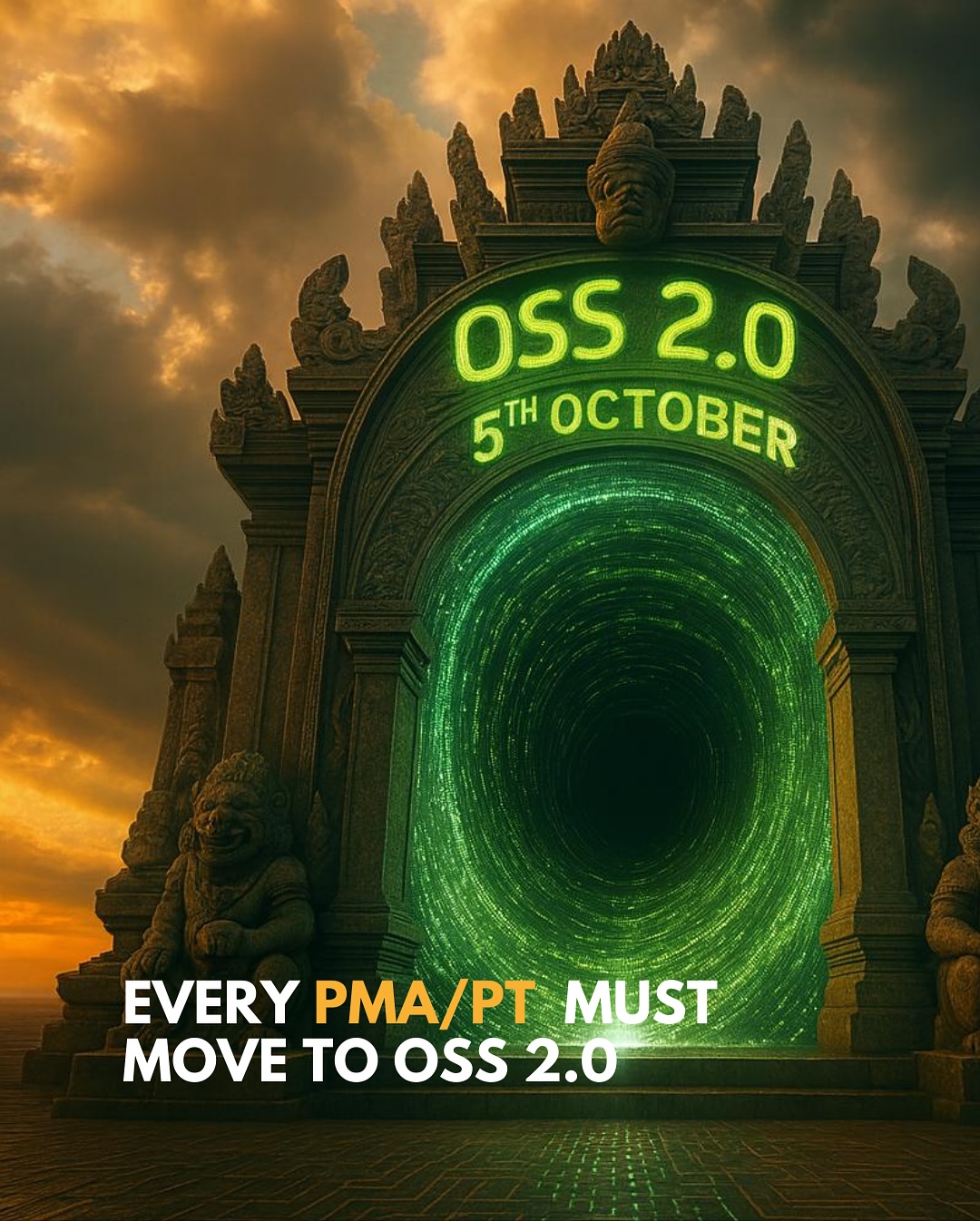
October 5th, 2025 wasn't just another date. It was the day Indonesia's business licensing system fundamentally changed. 47,000 companies missed the migration—and found themselves frozen out. Learn about Positif Fiktif and the new compliance reality.
OSS 2.0: The Migration Deadline That Locked Out Thousands
October 5th, 2025 wasn't just another date. It was the day Indonesia's business licensing system fundamentally changed—and companies that missed the migration found themselves frozen out of permits, renewals, and government services.
What Actually Happened
Indonesia's Online Single Submission (OSS) system has been the backbone of business licensing since 2018. Version 1.0 streamlined what used to require dozens of agency visits into a single digital portal.
Then came OSS 2.0—a complete rebuild designed to integrate with Indonesia's expanding digital infrastructure (NIB, LKPM, KBLI updates, SME partnerships). The government announced the migration window in early 2025: all businesses must manually migrate by October 5th.
No auto-migration. No grace period. No exceptions.
Companies that missed the deadline? Their OSS 1.0 accounts became read-only. They could see old data but couldn't:
- Submit annual LKPM reports (required for all companies)
- Apply for new licenses or permits
- Update business activities (KBLI codes)
- Process export/import approvals
Essentially, their businesses were regulatory ghosts—existing on paper but unable to interact with the system.
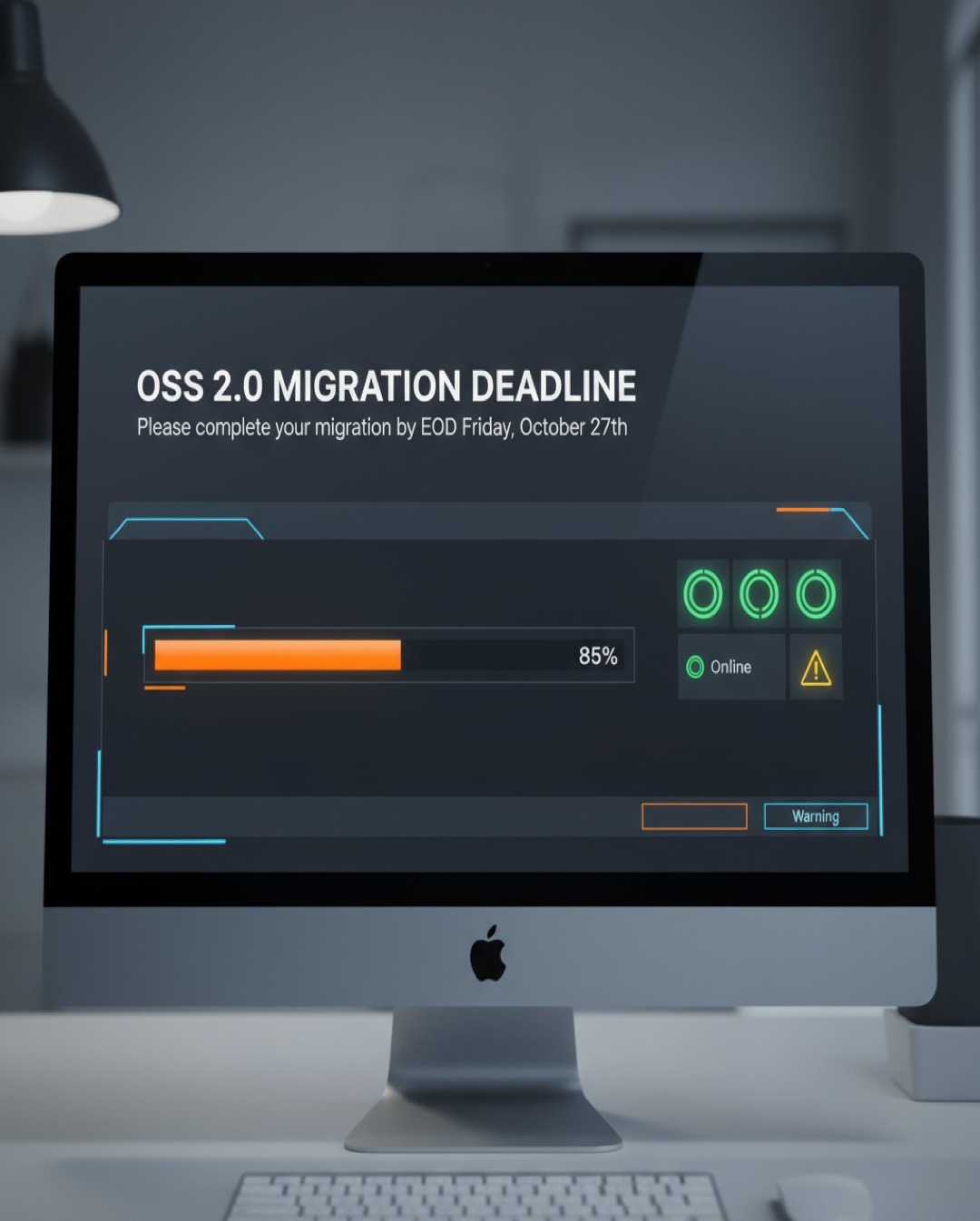 OSS 2.0 migration deadline notification and system interface
Why the Government Forced Migration
OSS 2.0 isn't just a facelift. It's structural:
1. KBLI Code Overhaul
Indonesia's business activity classification system (KBLI) was completely reorganized in 2024. Old codes? Deprecated. Companies had to manually re-select appropriate codes under the new taxonomy.
2. SME Partnership Requirements
Foreign-owned companies (PT PMA) in certain sectors now must formalize partnerships with Indonesian SMEs. OSS 2.0 enforces this by requiring documented partnerships before license renewals.
3. LKPM Integration
The annual company activity report (LKPM) is now tightly integrated with OSS 2.0. Failure to file LKPM blocks all other OSS functions—creating a hard dependency.
4. Real-Time Compliance Tracking
OSS 2.0 talks to tax, customs, labor, and environmental agencies in real-time. Non-compliance in one area now automatically flags across all agencies.
"OSS 2.0 is Indonesia's move toward proactive enforcement," explained Rina Setiawan, corporate compliance advisor in Jakarta. "In OSS 1.0, you could often delay filings or operate in grey areas. OSS 2.0 doesn't allow that."
What Migration Actually Required
The government made it sound simple: "Log in to OSS 2.0, confirm your data, done." Reality was messier.
Step 1: KBLI Code Re-Verification
Your old business activities had to be mapped to new KBLI codes. Sounds automatic—wasn't. Many codes split into subcategories or merged. Companies had to research which new codes matched their operations.
Error here? Your NIB becomes invalid.
Step 2: Document Re-Upload
Founding documents, shareholder agreements, domicile letters, director IDs—everything needed re-upload in OSS 2.0 format. Some required notarization updates.
Step 3: SME Partnership Documentation (if applicable)
Foreign companies in manufacturing, F&B distribution, retail, and several other sectors had to upload:
- Signed SME partnership agreements
- Proof of partnership implementation
- Beneficiary SME tax registration (NPWP)
No partnership? Migration blocked.
Step 4: LKPM Filing Sync
If your 2024 LKPM wasn't filed, OSS 2.0 wouldn't activate. You had to clear that first.
Step 5: Final Validation
Government verification took 5-14 days. During this window, you couldn't edit anything. If validation failed, you started over—but the clock kept ticking toward October 5th.
The Positif Fiktif Principle: Indonesia's Silent Approval Rule
Here's a legal concept most foreign business owners have never heard of—but should: Positif Fiktif (positive deemed approval).
Under Indonesian administrative law (specifically UU No. 11/2020 on Job Creation), if a government agency fails to respond to a permit or license application within the legally mandated timeframe, the application is automatically deemed approved.
Think of it as Indonesia's anti-bureaucracy failsafe. It was designed to prevent endless delays where companies submitted applications and then... waited. Forever. With no response, no rejection, no approval—just bureaucratic limbo.
How Positif Fiktif Works in OSS 2.0
OSS 2.0 integrates Positif Fiktif directly into the licensing workflow. Here's the timeline:
Standard OSS 2.0 Permit Processing:
- You submit a license application through OSS 2.0
- The system assigns it to the relevant agency (investment board, trade ministry, local district office)
- The agency has 3-7 working days (depending on license type) to approve, request clarifications, or reject
- If Day 7 passes with no action? Automatic approval (Positif Fiktif kicks in)
The system issues the license automatically, and the agency legally cannot reverse it without filing an administrative appeal—which requires documented justification.
Why This Matters for Companies
Positif Fiktif fundamentally shifts power dynamics. Instead of companies chasing agencies for responses, the burden is on the government to act within deadlines.
For OSS 2.0 migration and permit renewals, this means:
- No more "we're still reviewing": After 7 days, silence = approval
- Documented timeline protection: You can prove your application was submitted on Day 1 and auto-approved on Day 8
- Legal recourse: If an agency tries to block an auto-approved permit, you have grounds for administrative challenge
"Positif Fiktif changed everything for foreign investors," said Dr. Hadi Susanto, administrative law professor at Universitas Indonesia. "Before, agencies could delay indefinitely. Now, delay means approval. It's forced efficiency."
The Catch (There's Always a Catch)
Positif Fiktif only applies if:
- Your application is complete: Missing documents? The clock doesn't start until you submit everything.
- It's a qualifying license: Some high-risk permits (environmental impact assessments, mining licenses) are exempt and require explicit approval.
- No legal violations: If your application contains fraudulent information or violates zoning laws, Positif Fiktif doesn't protect you from post-approval sanctions.
Real-World Example
A Jakarta-based PT PMA submitted an OSS 2.0 business activity expansion in March 2025—adding two new KBLI codes for e-commerce distribution. The local trade office was supposed to verify within 5 working days.
Day 6, day 7, day 8—no response.
On Day 9, OSS 2.0 automatically issued the updated NIB with the new activities. The trade office later sent a "request for additional documentation" letter—two weeks after Positif Fiktif kicked in.
The company's response? "We appreciate the request, but our license was already auto-approved under Positif Fiktif. The system confirms approval on [date]. If you have concerns, please file an administrative review."
The office never responded again. The license stood.
How to Use Positif Fiktif Strategically
- Submit complete applications: Don't give agencies an excuse to delay the clock.
- Document everything: Screenshot submission timestamps, system confirmations, automated emails.
- Track deadlines religiously: Know when Positif Fiktif applies—Day 7 for most permits.
- Invoke it confidently: If you're past the deadline, state explicitly: "This application is deemed approved under Positif Fiktif as of [date], per OSS 2.0 automated confirmation."
Positif Fiktif isn't a loophole—it's Indonesian law. And it's one of the few regulations that actually works in favor of businesses instead of bureaucrats.
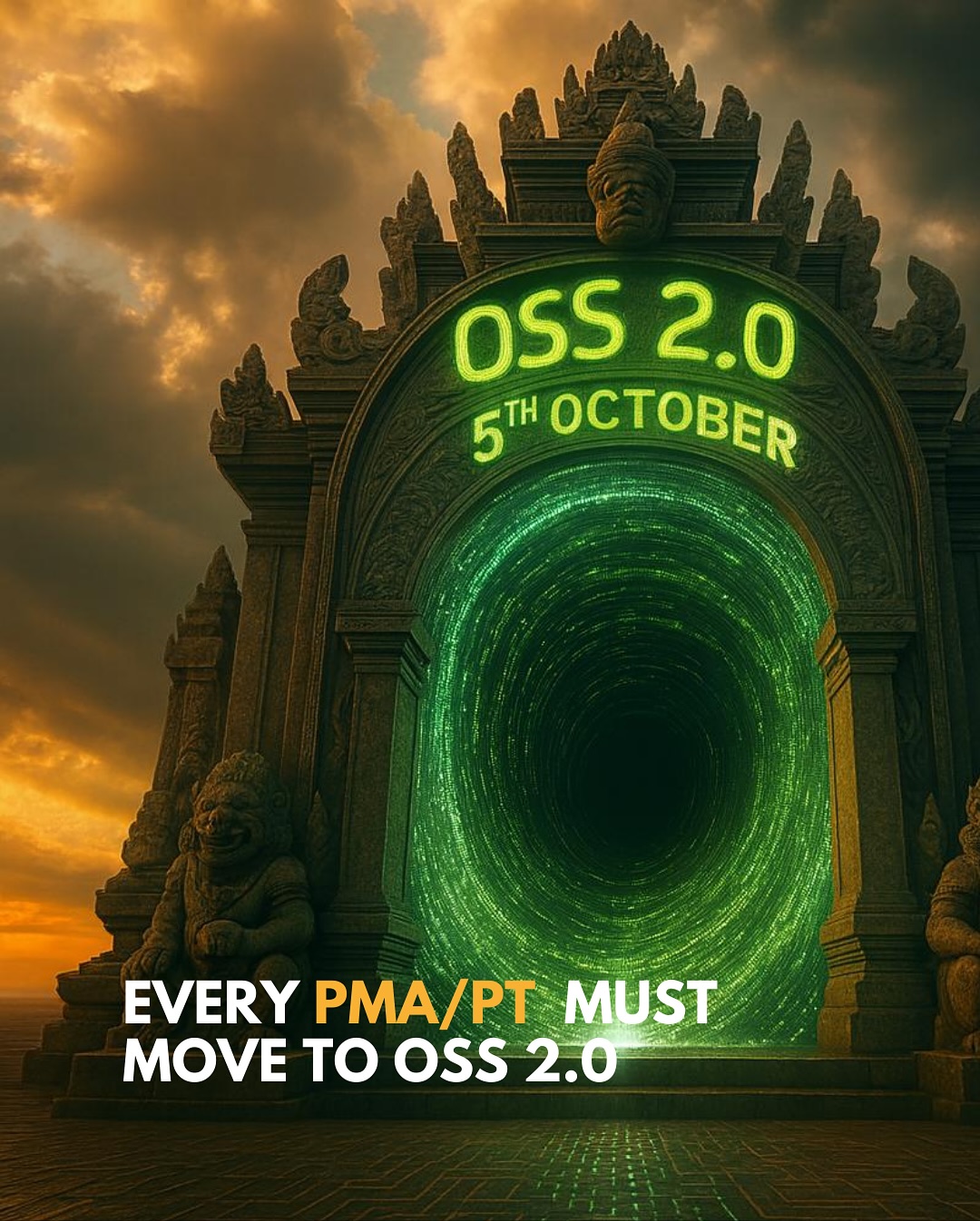 Professional business compliance work - OSS 2.0 represents Indonesia's shift toward automated regulatory processes
What Happened to Companies That Missed It
By October 6th, an estimated 47,000 businesses (mostly SMEs and foreign-owned PT PMAs) had not completed OSS 2.0 migration. The consequences were immediate:
Frozen License Renewals
- TDP (company registration) renewals: blocked
- Industry-specific permits (health, tourism, F&B): blocked
- Environmental clearances: blocked
Export/Import Paralysis
Companies reliant on import licenses for raw materials or export approvals for goods found themselves unable to process new shipments. For manufacturers, this meant production halts within weeks.
LKPM Submission Impossible
The 2025 LKPM filing deadline (April 30, 2026) requires OSS 2.0 access. Non-migrated companies faced a paradox: they couldn't migrate without filing LKPM, but couldn't file LKPM without migrating.
Banking & Tax Issues
Some companies reported banks flagging their accounts due to "irregular NIB status" (OSS 2.0 sync issues). Tax offices requested proof of OSS 2.0 migration during audits.
The Post-Deadline Scramble
After October 5th, the Ministry of Investment opened a "special remediation window" for non-migrated companies—but with penalties:
- Administrative fines: ₹5-15 million (depending on company size)
- Mandatory compliance audit before migration approval
- 30-day processing time (vs. 5-14 days during normal window)
"We had clients who ignored our August reminders," said Budi Santoso, corporate services manager at a Jakarta consultancy. "Post-deadline, their migration took six weeks and cost triple. One lost a major export contract because they couldn't process shipment approvals."
Why So Many Companies Missed It
Three reasons:
1. Information Overload
The Ministry issued guidance updates almost monthly between January and September 2025. Many company directors, especially smaller PT PMAs, couldn't keep up with requirement changes.
2. Language Barriers
OSS 2.0 portal is Indonesian-only. Foreign directors without local consultants often misunderstood steps or submitted incorrect documentation.
3. "It'll Get Extended" Assumption
Indonesia has a history of extending regulatory deadlines. Many companies gambled on an extension announcement. It never came.
The Ongoing Impact
OSS 2.0 fundamentally changed how Indonesian businesses operate. It's not just about migration—it's about a permanently more stringent compliance environment.
Quarterly Reporting
OSS 2.0 enables agencies to request quarterly updates, not just annual LKPM. Expect more frequent data submissions.
Automated Sanctions
Missed filings trigger automatic penalties. No warning letters, no grace periods—straight to sanctions.
Cross-Agency Visibility
Labor Ministry sees your tax filings. Environmental agency sees your import records. Everything is connected. Non-compliance in one area cascades everywhere.
What Companies Should Do Now
If you migrated successfully: Monitor your OSS 2.0 dashboard regularly. The system now sends compliance alerts, renewal reminders, and document expiration warnings. Ignoring them has immediate consequences.
If you haven't migrated: Act immediately. The post-deadline process is expensive and slow, but waiting longer only compounds problems.
The Checklist:
- OSS 2.0 account created and verified
- KBLI codes updated and confirmed
- All company documents re-uploaded
- SME partnerships documented (if required)
- 2024 LKPM filed and synced
- 2025 LKPM preparation started (due April 30, 2026)
- Quarterly monitoring calendar set
Professional Help Isn't Optional Anymore
OSS 2.0 isn't something you "figure out later." It's mission-critical infrastructure for every company operating in Indonesia. The days of casual compliance are over.
Bali Zero specializes in OSS 2.0 compliance for PT PMAs and local companies—handling KBLI verification, document prep, SME partnership structuring, and LKPM filing. We ensure your business stays compliant, operable, and penalty-free.
📲 Get your OSS 2.0 compliance audit with Bali Zero and stop worrying about regulatory blindsides.
Header image: OSS 2.0 migration deadline notification. Source: Instagram @balizero0
Premium business intelligence for Southeast Asia