Your bar is packed. Music's loud. Drinks are flowing. Then you see them: two officials with clipboards, walking straight toward your manager. And you realize—nobody checked the alcohol license in six months.
When Inspectors Walk In: The Real Cost of Skipping Your SKPL
Your bar is packed. Music's loud. Drinks are flowing. Then you see them: two officials in crisp shirts, clipboards in hand, walking straight toward your manager. And you realize—nobody checked the alcohol license in six months.
What Actually Happens During an Inspection
Indonesian authorities don't announce alcohol compliance inspections. They arrive during business hours, request documentation on the spot, and expect immediate answers.
What they're checking:
- NIB (Nomor Induk Berusaha) – Your business registration number
- SKPL (Surat Keterangan Penjualan Liquor) – Your alcohol sales permit
- Surat Penunjukan – Appointment letter proving legal alcohol procurement
- 21+ enforcement protocols – Age verification systems, signage, staff training records
If everything's in order? They note compliance and leave. If not?
Operations suspended pending corrections. Fines ranging from ₹5 million to ₹50 million. Potential license revocation for repeat offenders.
For a busy beach club in Seminyak pulling ₹200 million monthly revenue, a single week's closure is catastrophic.
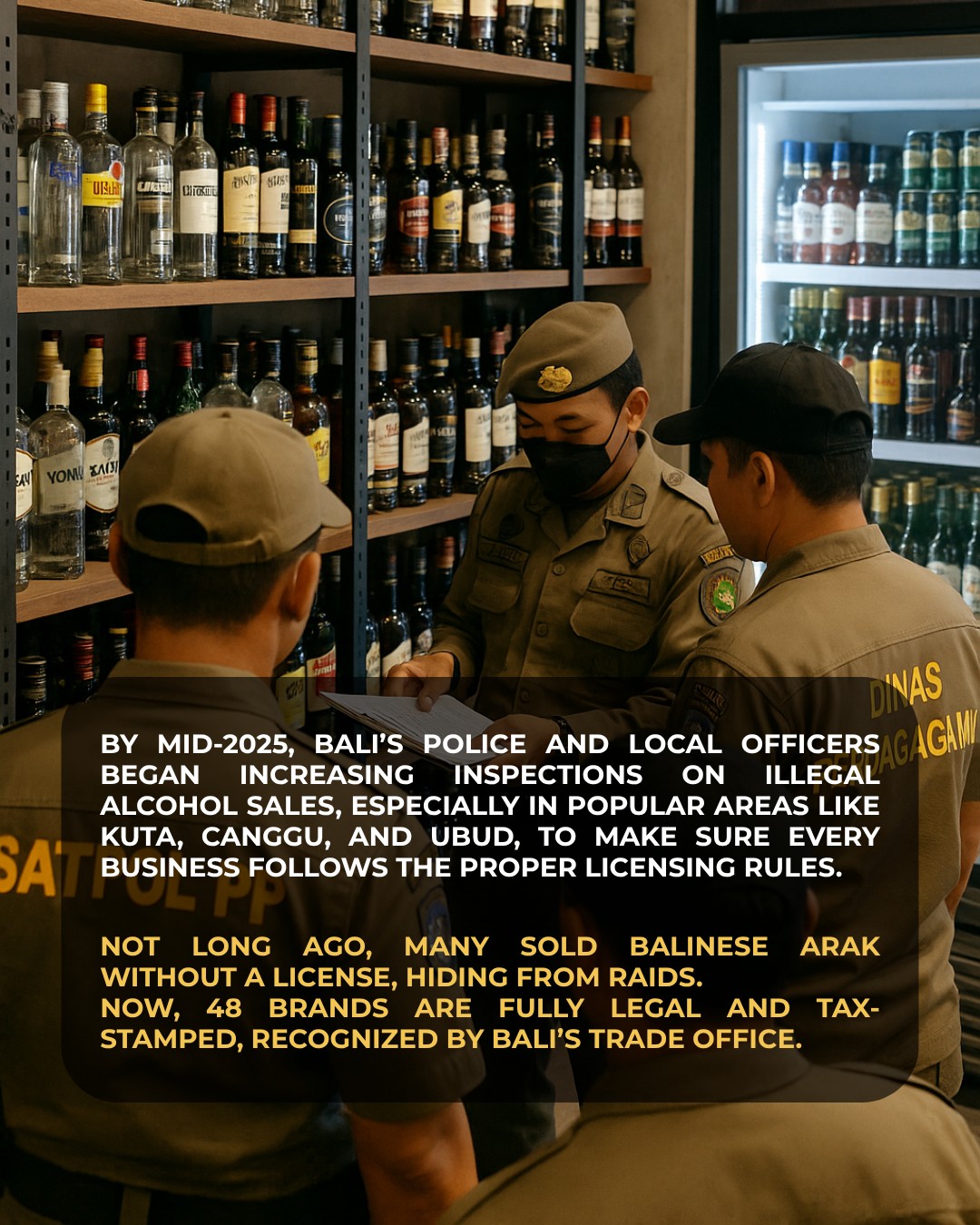 Licensed alcohol service in Bali - proper SKPL compliance enables legal operations
The SKPL: What It Is and Why It Matters
Indonesia's alcohol licensing system operates on three levels:
Federal: Ministry of Trade sets national alcohol policy
Provincial: Provincial governments issue trading licenses (SKPL)
Local: District offices enforce age restrictions and sourcing rules
Your SKPL (Surat Keterangan Penjualan Liquor) is your provincial-level permission to sell alcohol. Without it, every bottle you serve is technically illegal—regardless of your NIB, tax payments, or business permits.
"We see foreign bar owners all the time who assume getting a business license covers alcohol," said Made Suardana, a Bali-based licensing consultant. "Then they're shocked when officials shut them down for missing SKPL. It's not optional."
What You Actually Need
1. NIB (Business Registration)
Your base company registration through OSS 2.0. Restaurants and bars typically use KBLI codes 56101-56309 (food service) + special alcohol sales codes.
2. SKPL (Alcohol Sales Permit)
Issued by provincial trade offices. Requirements:
- Minimum capital thresholds (varies by alcohol type)
- Business location approval (zones where alcohol sales are permitted)
- Proof of proper storage facilities
- Staff training documentation on responsible service
Timeline: 6-12 weeks
Validity: Annual renewal
Cost: ₹8-15 million (permit + consultancy)
3. Surat Penunjukan (Supplier Appointment Letter)
Proof you source alcohol from licensed distributors—not grey-market smugglers. Indonesian law prohibits direct import by restaurants/bars; you must purchase through designated suppliers.
4. 21+ Enforcement Protocols
- Visible signage ("21+ Only" in Indonesian/English)
- ID checking systems
- Staff training records
- Incident logbooks
The Traps Nobody Warns You About
Trap #1: SKPL Doesn't Cover All Alcohol
Indonesia classifies alcohol in three categories:
- Class A: Beer (up to 5% ABV)
- Class B: Wine, sake, soju (5-20% ABV)
- Class C: Spirits (above 20% ABV)
Your SKPL specifies which classes you can sell. A wine bar that suddenly starts serving cocktails without updating permits? Illegal.
Trap #2: Zoning Restrictions
Not all areas of Bali permit alcohol sales. Religious zones, areas near schools, certain traditional villages—off-limits. Your business location must be pre-approved.
Trap #3: The Supplier Game
Indonesia has maybe 12-15 licensed alcohol distributors nationwide. They control pricing, delivery schedules, and product availability. If you're buying cheaper stock from "a friend of a friend," you're violating sourcing rules—and inspectors know all the distributors.
What Non-Compliance Actually Costs
Scenario 1: First Offense, Minor Violation (Missing Signage)
- Warning letter
- 7-day correction period
- Administrative fine: ₹5-10 million
Scenario 2: No SKPL, Caught During Inspection
- Immediate suspension of alcohol sales
- Fine: ₹25-50 million
- Must obtain SKPL before reopening (6-12 weeks)
- Revenue loss during closure
Scenario 3: Repeat Offender or Serious Violation (Serving Minors, Unlicensed Spirits)
- Business license revocation
- Criminal charges possible
- Permanent alcohol sales ban for premises
- Deportation risk for foreign owners/managers
"We had a client lose a ₹2 billion investment because they ignored SKPL compliance," said Andi Wijaya, attorney specializing in hospitality law. "The property owner sued them for breach of lease when authorities shut down operations. Total loss."
The Renewal Trap
SKPL permits renew annually—but the process isn't automatic. You must:
- Submit renewal application 30 days before expiration
- Provide updated business financials
- Prove ongoing staff training
- Pay renewal fees
If your SKPL lapses—even by one day—you're operating illegally. And unlike NIB renewals (often granted grace periods), alcohol permits are strict. No SKPL = no alcohol sales, period.
Is There a Shortcut?
No.
Some consultants promise "express SKPLs" or "connections" with provincial offices. Most are scams. Indonesia's licensing system has digitized significantly; bribes are riskier and less effective than they used to be.
The only shortcut is starting the process early and hiring competent legal help who knows provincial regulations.
For Bar & Restaurant Owners: The Checklist
If you operate (or plan to open) any establishment serving alcohol in Bali:
- NIB with correct KBLI codes for alcohol sales
- Provincial SKPL for all alcohol classes you serve
- Surat Penunjukan from licensed distributors
- Visible 21+ signage (Indonesian + English)
- Staff training documentation (updated quarterly)
- Incident logbook (age verification refusals, problem guests)
- Annual renewal calendar (SKPL, health permits, fire safety)
Every unchecked box is a liability.
Get Compliant Before They Show Up
Alcohol licensing in Indonesia isn't optional, and it's not negotiable. The regulatory environment is tightening, enforcement is increasing, and the cost of non-compliance far exceeds the cost of doing it right.
Bali Zero specializes in F&B licensing compliance for bars, restaurants, and beach clubs—from NIB registration to SKPL applications to supplier coordination. We ensure you're fully legal before you serve your first customer.
📲 Get your SKPL compliance assessment with Bali Zero and operate with confidence, not anxiety.
Header image: SKPL documents and alcohol compliance checklist. Source: Instagram @balizero0
Premium business intelligence for Southeast Asia